Thirty steps behind in space
thirty years ahead in time;
a party we were on the contour line
rolling stones on our own on every incline.
I had climbed to the highlands
some answer to find
but the roaring silence spoke:
We can only again become one of a kind
once you’ve learned how to sing
to the tune of Diäk!wain’s broken string.
So to the lowlands I returned
the threads of my cord had unravelled
and turned into strings,
to be strummed before twined:
Truthful body
tender soul
humble mind.
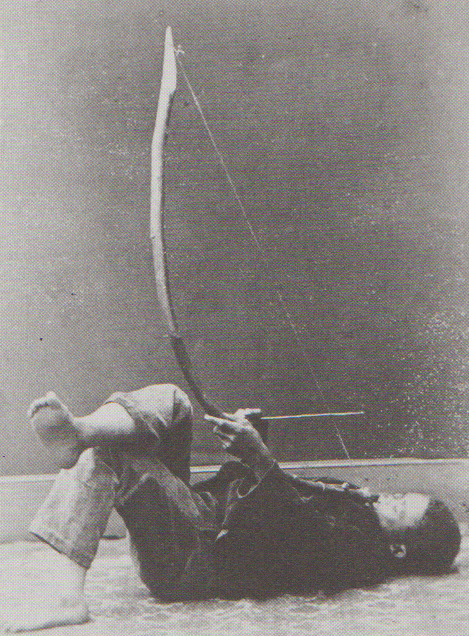
“/Uma playing a musical bow” –
This photograph of a /Xam-boy is taken from the bi-lingual book “‘Der Mond als Schuh / The Moon as Shoe’. Drawings of the San”, edited by Miklós Szalay, Zürich 2002, p.55 – The book was published on occasion of an exhibition of San-drawings held in 2003 first at Zürich University, and then at the South African National Gallery, Iziko Museums in Cape Town
_______________________________________________
I drafted the first version of this on 4th November 2026, during the last night of my “Rim of Africa” Traverse 6 hike. Reworking it a couple of times since, I eventually arrived at the above final version on 13th November. – Why the change?
In the first version the second stanza’s last three verses had read:
“You will only become one of our kind
Once you’ve learnt how to sing
To the beat of one hand clapping”
The “single hand clapping” was an image which I borrowed from a famous Zen-Koan, a paradox similar to the “roaring silence” (an oxymoron that has fascinated me long time. I encountered it the first time in 1976 when Manfred Mann’s Earth Band released their seventh album titled “The Roaring Silence”). Re-reading these three verses time and again their double Zen-reference eventually began to strike me as laboured and trite. And following my train of thoughts about how and why the mountains seemed to have rejected me on this journey, I recalled Antjie Krog’s 2004 anthology of /Xam poetry titled “the stars say ‘tsau’”. This book presents a selection of poems taken from the famous Bleek and Lloyd collection of Bushman poetry and lore. Krog’s anthology opens with the famous poem “the broken string” in which the /Xam-reciter Diä!kwain laments having lost the connection with nature “because the string has broken for me / therefore / the place feels strange to me / on account of it” (Krog 2004:13) – Which is why my poem’s cord now unravels into three strings.